
10 Common Waxing Myths We Hear All the Time at Skin Blissed
If you’ve ever thought about getting waxed but felt nervous because of something you heard online, from a friend, or from one bad experience years ago, you are definitely not alone.
At Skin Blissed in Cranston, Rhode Island, we hear waxing myths all the time. Some are harmless, some are outdated, and some stop people from trying a service they might actually love.
So let’s clear a few things up.
Here are some of the most common waxing myths we hear , and what’s actually true
1. “Waxing makes your hair grow back thicker.”
False.
This is one of the biggest myths out there. Waxing removes the hair from the root, not just from the surface. Because of that, regrowth often feels softer than shaving. Over time, many people notice their hair starts to come back finer and more sparse with consistent appointments.
If your hair ever seems thicker after a break from waxing, it is usually just because you are seeing the full regrowth cycle again, not because waxing changed your hair.
2. “You have to let your hair get super long before a wax.”
Not exactly.
Your hair does need to be long enough for the wax to grip, but it does not need to be wild or out of control. In most cases, about 2 to 3 weeks of growth after shaving or 4 weeks after your last wax is a good place to start.
If it is a little longer than ideal, that is usually manageable. The most important thing is making sure the hair is long enough to be removed properly.
3. “Waxing is only for people with a high pain tolerance.”
False.
Let’s be honest, waxing can be uncomfortable, especially if it is your first time. But “painful” and “unbearable” are not the same thing.
For most people, the discomfort is quick and very manageable. It also tends to get easier when you wax regularly because the hair often grows back softer and finer over time.
At Skin Blissed, we focus on making the experience as comfortable as possible by using proper technique, moving efficiently, and guiding you through the service.
4. “If you have sensitive skin, waxing isn’t for you.”
False.
Having sensitive skin does not automatically mean you cannot get waxed. It usually means you need the right esthetician, the right products, and the right aftercare.
Some redness or sensitivity right after a wax is completely normal. The American Academy of Dermatology notes that after waxing, it helps to avoid heat, wear loose clothing, and use gentle, non-comedogenic moisturizer.
That is why we always recommend following your aftercare instructions and letting us know about any products, medications, or skin concerns before your appointment.
5. “You’ll get ingrown hairs no matter what.”
False.
Ingrowns can happen, but they are not guaranteed. A lot of the time, ingrowns are influenced by things like dead skin buildup, friction, tight clothing, hair texture, and inconsistent aftercare.
One of the best ways to help prevent them is staying on top of exfoliation and keeping the area moisturized once your skin has had time to calm down after your wax. Since waxing also removes dead skin cells, it can help with smoother skin when paired with good home care.
6.“You can shave in between waxes.”
You can, but you really shouldn’t.
If your goal is better waxing results, shaving in between appointments can make it harder to keep the hair on the same growth cycle. That can lead to patchier regrowth and make your next wax feel less effective.
Staying consistent with your appointments gives the best long-term results and helps your hair grow in more evenly.
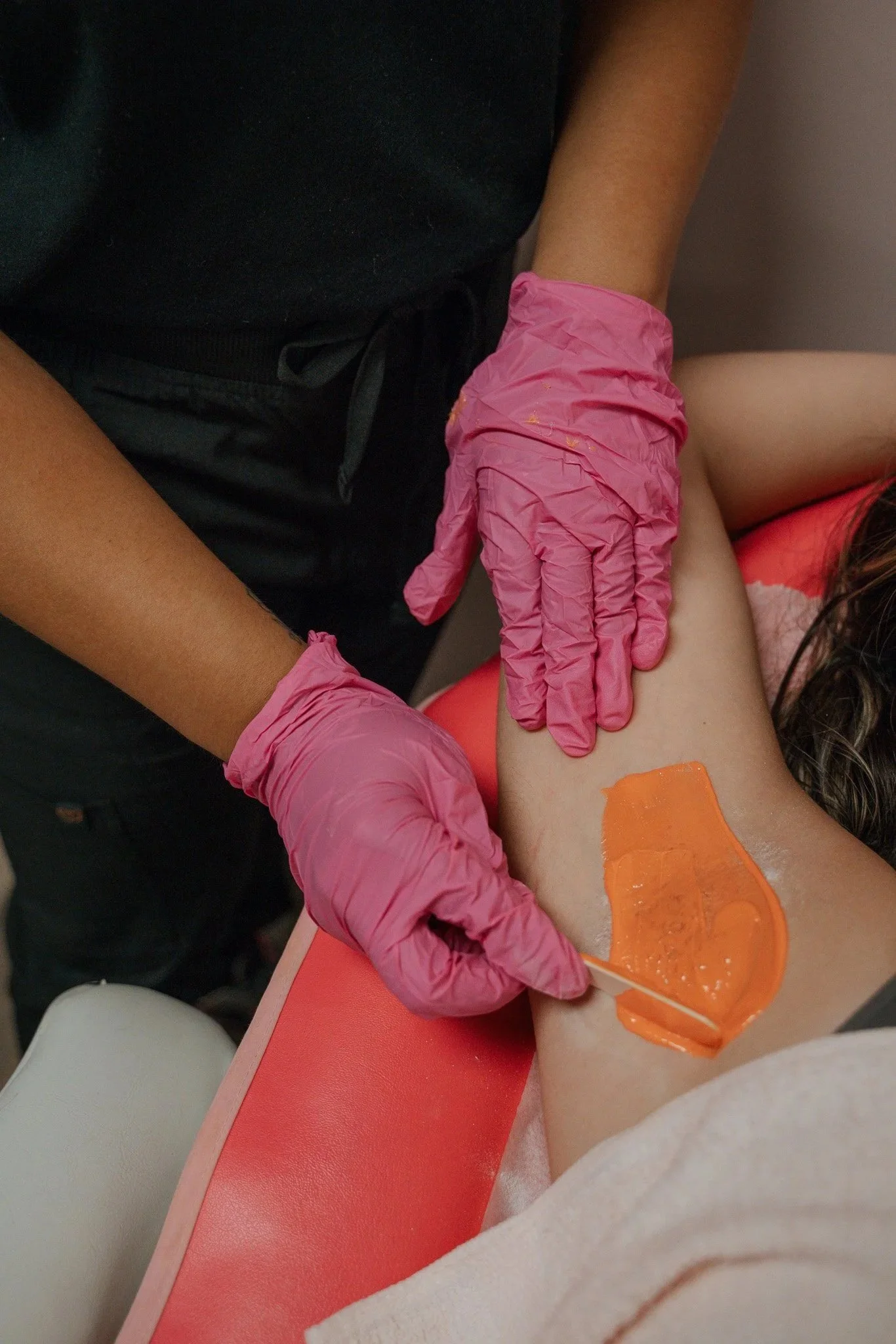
7. “Waxing ruins your skin.”
False.
Professional waxing should not ruin your skin. In fact, when it is done correctly, waxing can leave your skin feeling smoother and softer.
Problems usually come from improper technique, waxing over compromised skin, waxing too soon after certain treatments, or not following aftercare. That is why professional application and skin awareness matter so much.
8. “You can go to the beach, gym, or pool right after your wax.”
Not recommended.
Freshly waxed skin is more sensitive, and your follicles are more open immediately after the service. Heat, sweat, friction, hot showers, and pools can all increase the chance of irritation afterward. The American Academy of Dermatology specifically recommends avoiding hot baths and showers right after waxing and wearing loose clothing to soothe the skin.
We usually recommend giving your skin a little time to breathe before jumping back into all of that.
9. “Waxing causes dark spots.”
Not by itself.
Waxing itself is not automatically the cause of hyperpigmentation. Dark marks are more often related to skin irritation, inflammation, or trauma. Cleveland Clinic notes that skin discoloration can happen after inflammation or other skin trauma.
That is why technique matters, and so does aftercare. If your skin is handled properly and you follow the right post-wax routine, you are much less likely to deal with unwanted irritation.
10. “Once you start waxing, you can never stop.”
False.
You are not locked in forever. You can stop whenever you want. But many people choose to continue because they like how long the results last compared with shaving.
Since waxing removes hair from the root, results usually last much longer than shaving, which only removes hair at the skin’s surface.
For a lot of our clients, that means less daily upkeep, smoother skin longer, and a routine that feels way easier.
The Truth About Waxing
There are a lot of myths out there, but the truth is simple: waxing can be a great option when it’s done correctly, consistently, and with the right aftercare.
At Skin Blissed, we want you to feel comfortable, informed, and confident before you ever step into the wax room. Whether you are brand new to waxing or just looking for a better experience, we are here to make the process feel way less intimidating.